My hometown is a typical "declining city" in the Northeast, and what's recorded here is how I see it—mostly scenery within two or three kilometers of my home.
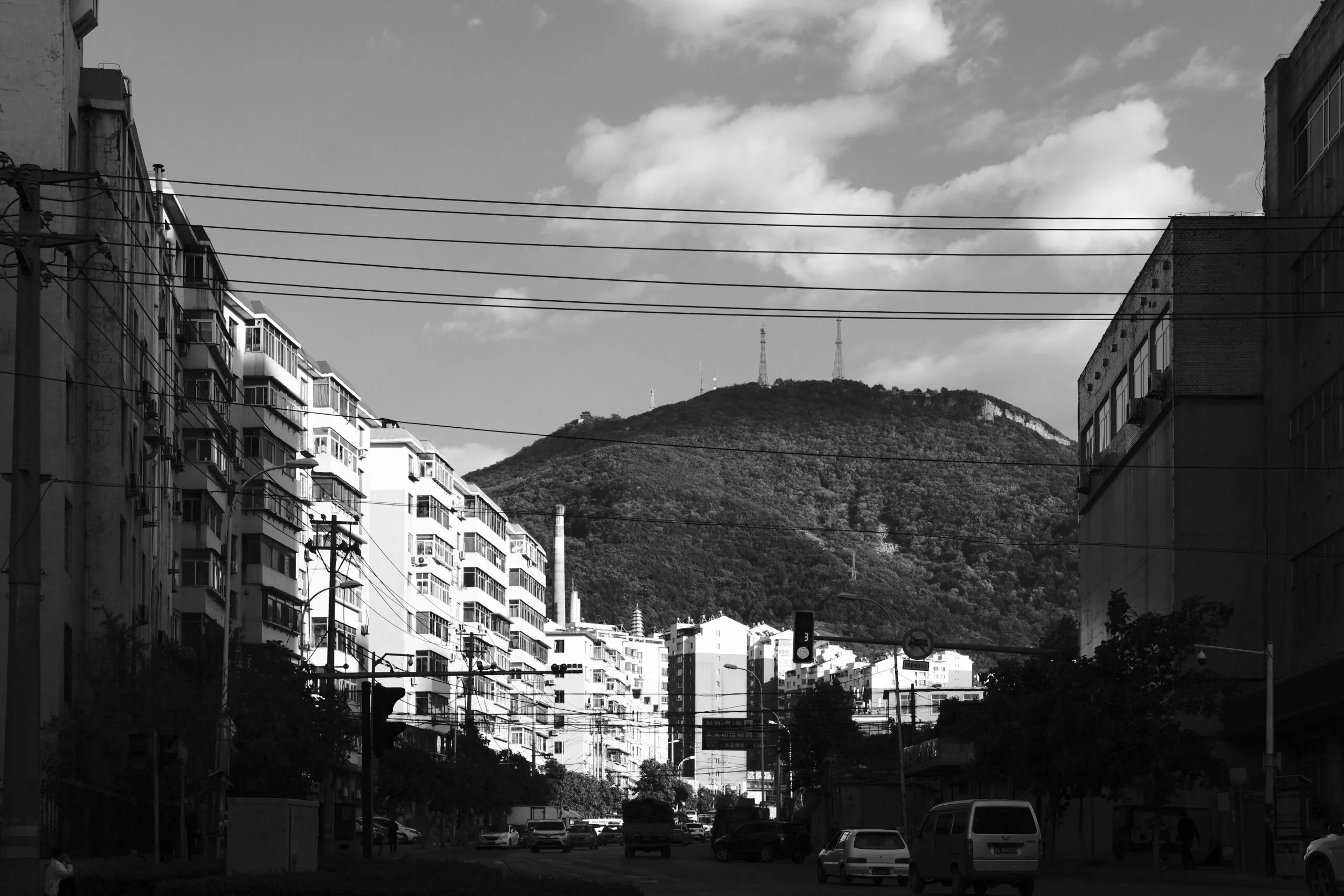
When you mention a "mountain city," the first that comes to mind is surely Chongqing, but this place is indeed also called a mountain city. As a kid, climbing hills in the city center was an everyday thing; only when I went elsewhere did I realize not every place has this blessing. Like all cities, this one also has natural scenic spots as its calling card; but like all cities, the scenic spots are indeed beautiful, yet not as beautiful as in the promotional videos.
As a typical industrial city of the Northeast, old yet stubborn industrial vibes linger everywhere here. The train station and steel mill in the city center display its former identity as the capital of coal and iron; factory buildings and homes interweave, and the ruins of factories interweave with the ruins of homes. Many of us kids of this generation probably explored abandoned factories and picked up discarded factory parts, though many of them have since left this city.
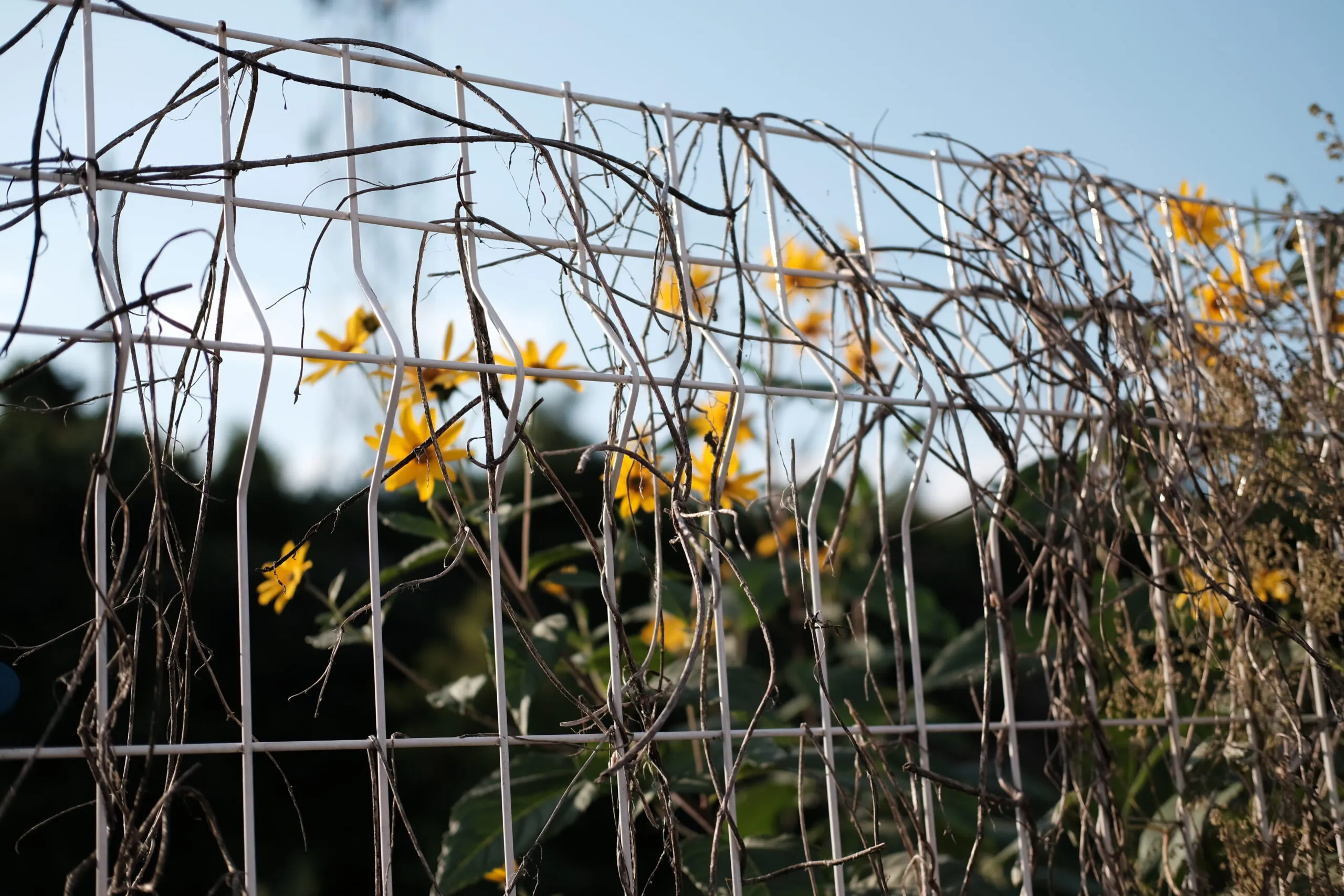
In my records, you won't see neat uniformity or glossy brightness. But you may feel the unique aesthetic in the clutter and dilapidation of the old district. Because the original residents still love this place. They no longer have wheat, but they're still willing to plant flowers on this wasteland.
——October, 2020——
What a mountain city means is: no matter which corner of the city you're in, you can see mountains, because there are mountains within the city.
Residential buildings, factories, and slender chimneys set off one another—the most common sight in the old district. Right below the chimney in the center of the frame, nearby, there's also a love hotel.
Residential buildings in the old district. In winter, to block the wind, most old windows are covered with plastic sheeting for windproofing and insulation, taken down again in spring. Newer buildings don't do this.
The typical ground-floor perimeter of an old building—tight protective railings and a tangle of wires. The ladder is locked to the railing; if it weren't, someone might steal it to sell as scrap one day.
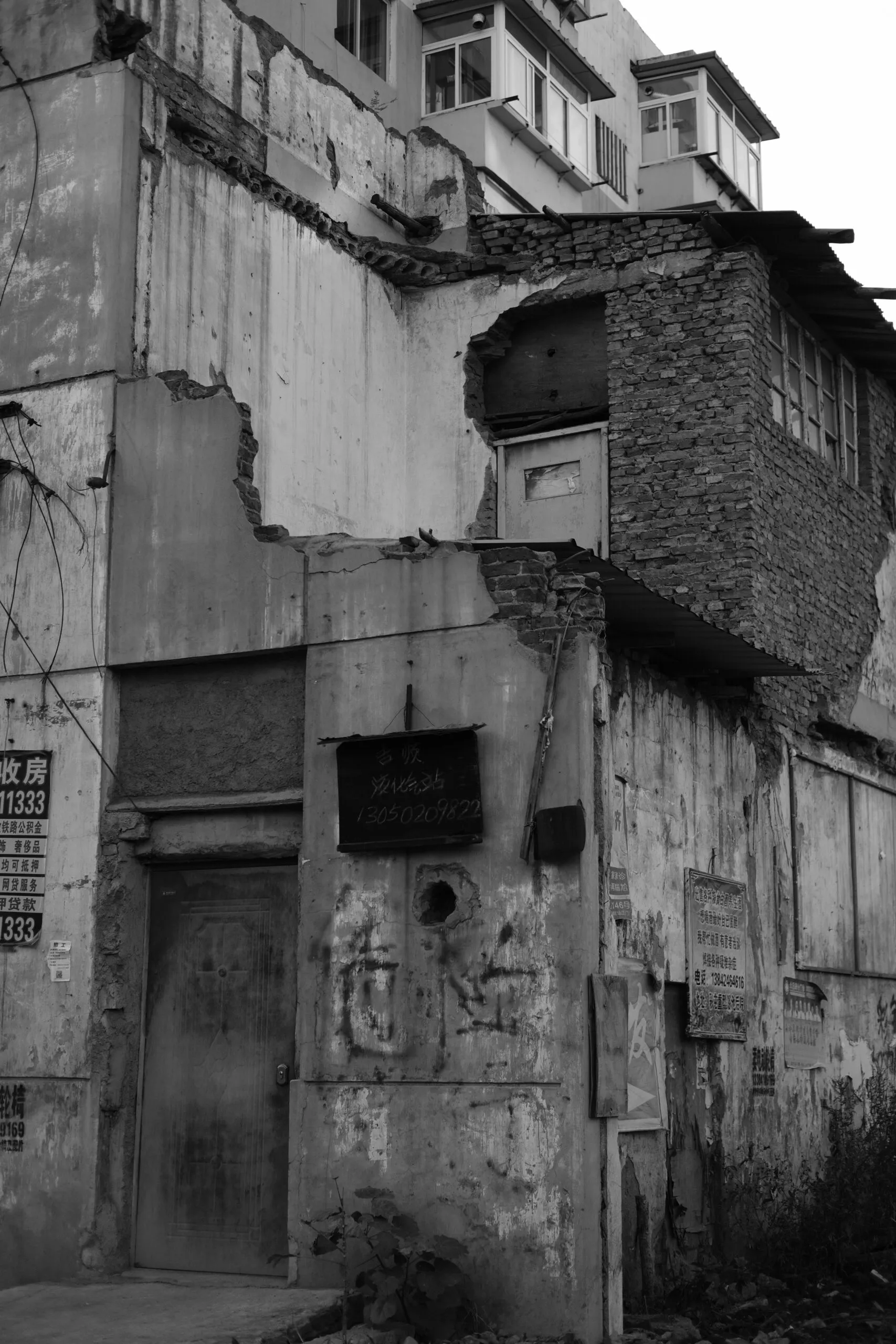
What you see most in the old district are tightly shut doors—doors of homes, of shops, of factories. No one knows whether there's still anyone inside, or whether such doors will ever be opened again.
In front of some homes you'll find sofas used for living indoors; in summer, old men come out to cool off and fan themselves. Now these sofas are covered in dust.
A cat downstairs staring at my lens from afar.
"Crack down on evil" is currently the most frequently seen slogan. As for clearance sales, the two-yuan store across from the train station has been clearing its stock for over a decade.
A mysteriously witty graffiti.
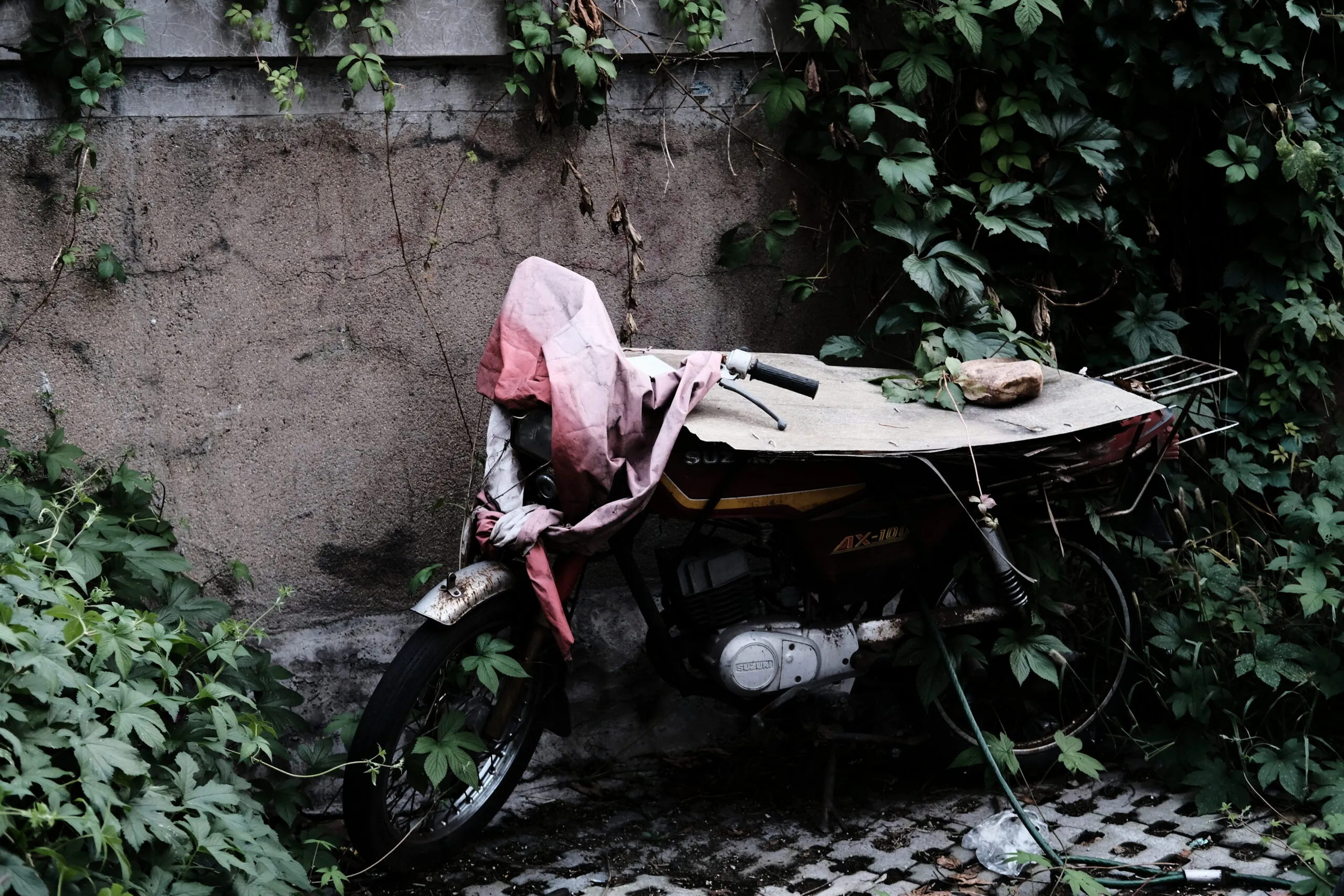
For young artsy folks, the wasteland punk of the Northeast's old districts is everywhere. But for those who live here, even if their beloved car is scrapped, they still don't want it left in the rain.
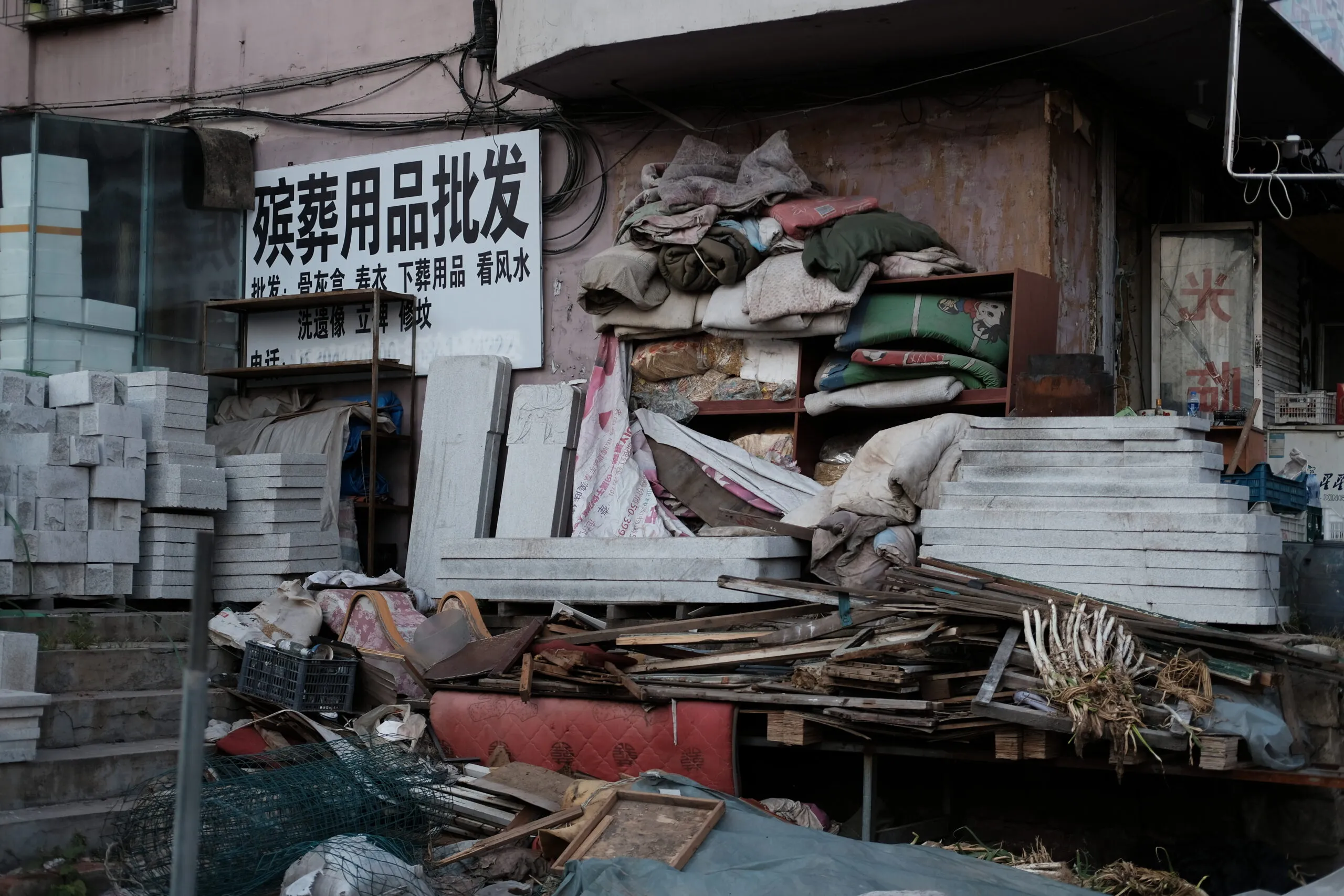
The density of funeral shops in our part of the old district is astonishing—probably second only to supermarkets and vegetable markets, even though cemeteries are far away. But the old district is left with only the elderly, and the funeral industry is already one of the few good businesses.
Also, this is a photo I don't like to render in black and white.
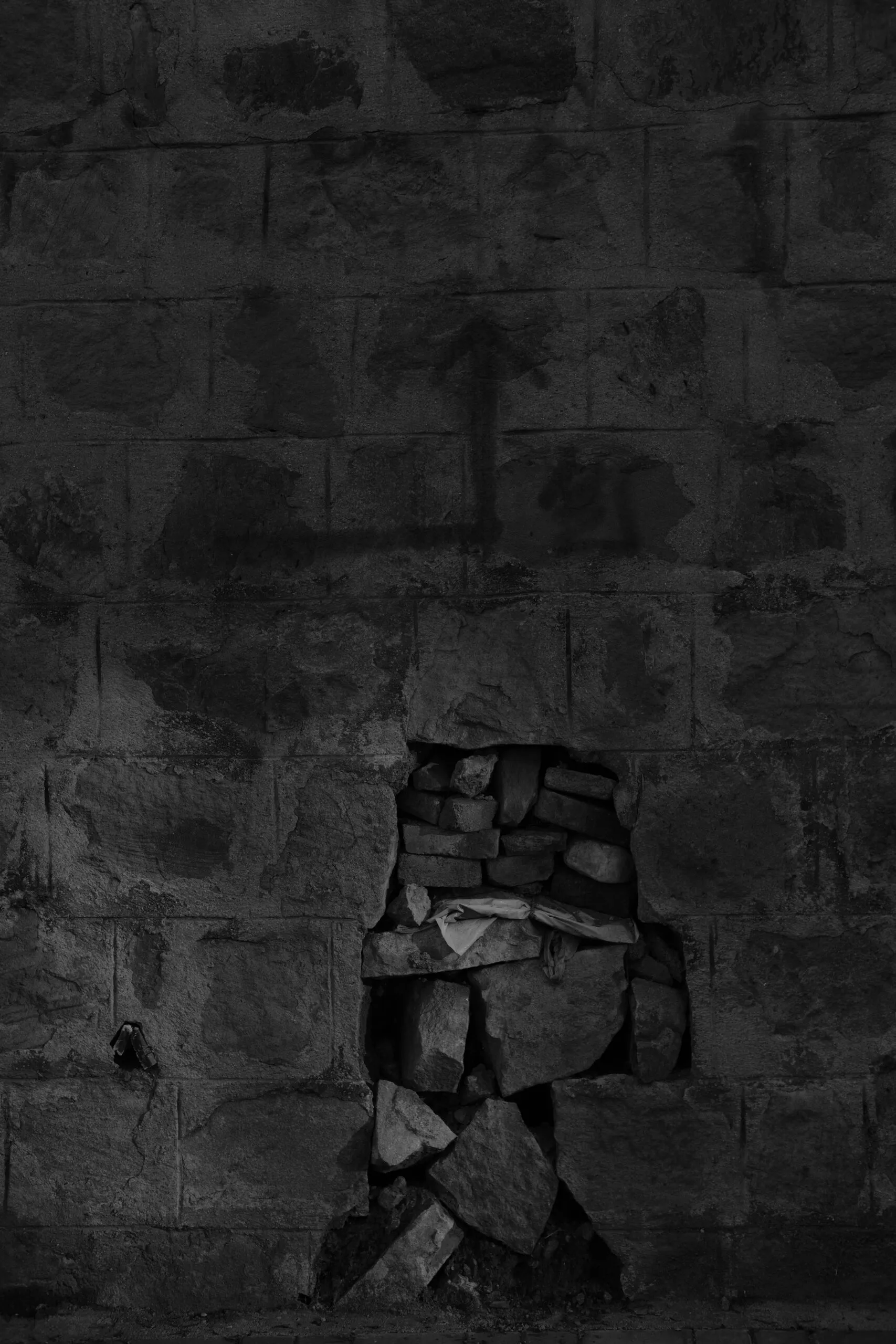
When a wall is broken, patch it with bricks, and you always end up with a stable structure. A truly stable composition is one that looks stable.
A two-story building about to be demolished. For various reasons, buildings marked for demolition often take a long time to be completely leveled; this one is in a half-demolished, half-standing state. Until then, most people choose to keep living in such buildings or run small businesses.
Plants are arranged irregularly along the railing outside the residential compound. On the other side of the railing is a wide drainage ditch. You can find this moment of quiet in the old district too.
Even a cluttered old street can become clean after rain. Yet the rain still can't wash away the cigarette butts everywhere.
"Focusing on improving the living environment of the people".